
Understanding Carat Weight vs. Total Carat Weight (tcw)
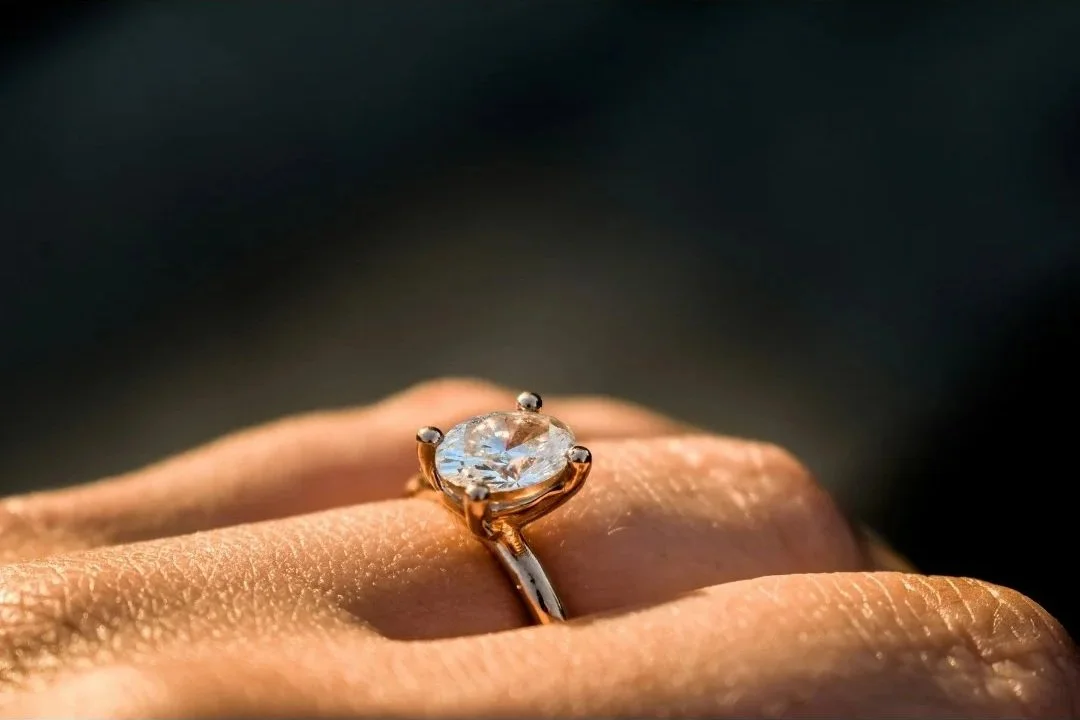
If you’ve ever browsed for an engagement ring or a pair of diamond studs, you’ve likely seen two different terms: Carat Weight and Total Carat Weight (tcw).
At first glance, they seem like they’re saying the same thing. But in the jewelry world, that tiny "total" makes a massive difference in both the look of the piece and the hit to your wallet. Let’s break down the jargon so you can shop like a pro.
The Basics: What is a Carat?
Before we dive into the comparison, a quick refresher: a carat is a unit of measurement for a diamond's weight, not its size.
1 Carat = 1.0ct
Carat Weight (Single Stone)
When a jeweler refers to Carat Weight, they are usually talking about the weight of a single, individual diamond. This is most common when discussing solitaire rings.
The Rarity Factor: Large diamonds are much harder to find in nature than small ones.
The Price Jump: Because of that rarity, the price of diamonds doesn't increase linearly—it jumps exponentially. A single 2.00-carat diamond will cost significantly more than two 1.00-carat diamonds of the same quality.
Total Carat Weight (tcw)
Total Carat Weight (tcw) represents the combined weight of all the diamonds in a piece of jewelry. This includes the center stone plus any side stones, pavé accents, or "halo" diamonds.
Commonly used for: Multi-stone rings, diamond earrings (where tcw is the sum of both studs), and tennis bracelets.
The "Look" for Less: You can often get a 1.50 tcw ring for a fraction of the price of a 1.50-carat solitaire. Why? Because that weight is made up of many small, less expensive stones.
Remember that every stone will need claw maintenance at some point. But, that will be another blog.
Side-by-Side Comparison
Feature Carat Weight (ct) Total Carat Weight (tcw)
Refers to... One single diamond. Every diamond in the piece combined.
Typical Use Solitaire engagement rings. Halos, three-stone rings, bracelets.
Price Point Higher (due to rarity of large stones). Lower (multiple small stones cost less).
Visual Impact One large, "statement" sparkle. Broad, multi-directional sparkle.
Which One Should You Choose?
The "better" option depends entirely on your style and budget:
Choose Carat Weight (Solitaire) if: You value the investment and prestige of a single large stone. It’s a classic look that holds value well and acts as a clear focal point.
Choose Total Carat Weight if: You want maximum "finger coverage" or a more intricate, vintage design. You can achieve a very glamorous, high-sparkle look without the six-figure price tag of a massive single stone.
Pro Tip: Always ask for the weight of the center stone specifically. A "2-carat ring" might actually be a 1-carat center stone surrounded by 1 carat of tiny accents. Knowing the breakdown ensures you aren't overpaying! Also make sure that ALL the diamonds are the same quality!!!
love and sparkles
Carey